Training that reconnects practice
with clinical reality
Mechanical ventilation cannot be improvised. It requires practical skills, proven reflexes, and the ability to react, often urgently, sometimes at home, always with rigor.
Yet most professionals and caregivers involved in ventilatory support receive little or no hands-on training. Too often, content is limited to theoretical presentations, with no real scenarios, no hands-on practice, and no real-time feedback.
Training in ventilation is not just explaining a protocol. It is about training gestures, building clinical reasoning, and learning to adapt to each patient.
This need for real-world training led us to completely rethink how ventilation is learned.
Why train ventilation with a simulator?
Today, learning to ventilate a patient is still too often done on a PowerPoint. Little hands-on practice, little interaction, and rarely scenarios that are close to reality.
Ventilation is demanding: it involves setting choices, responses to alarms, correct use of a mask or humidifier, sometimes in tense conditions, at the patient's home. These skills are built through experience, not theory alone.
That is where simulation comes in. Training with a high-fidelity simulator allows learners to manipulate a real ventilator, make choices, trigger (or avoid) alarms, and immediately see the effects.
No pressure, no risk to the patient, but with all the educational value of a realistic setting.
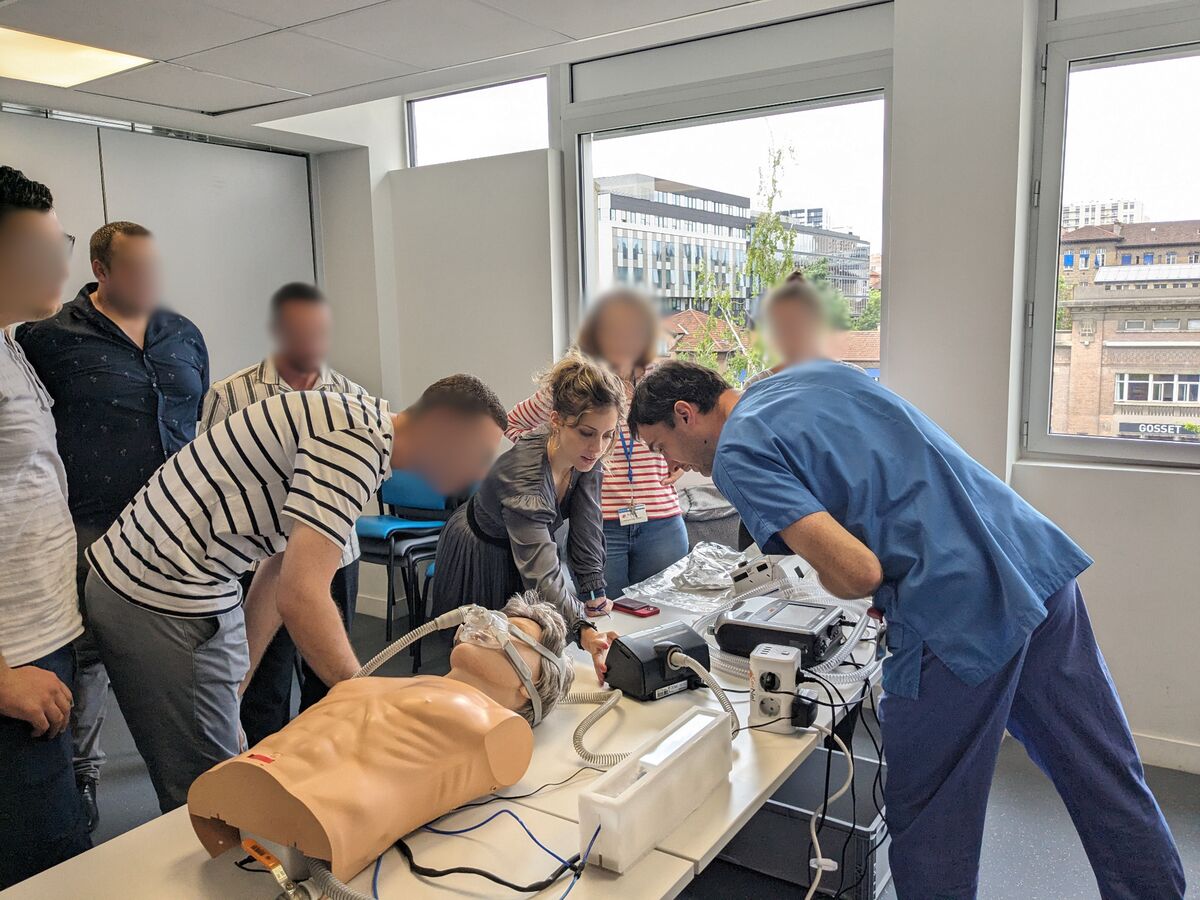
Georges, a simulated patient for very real situations
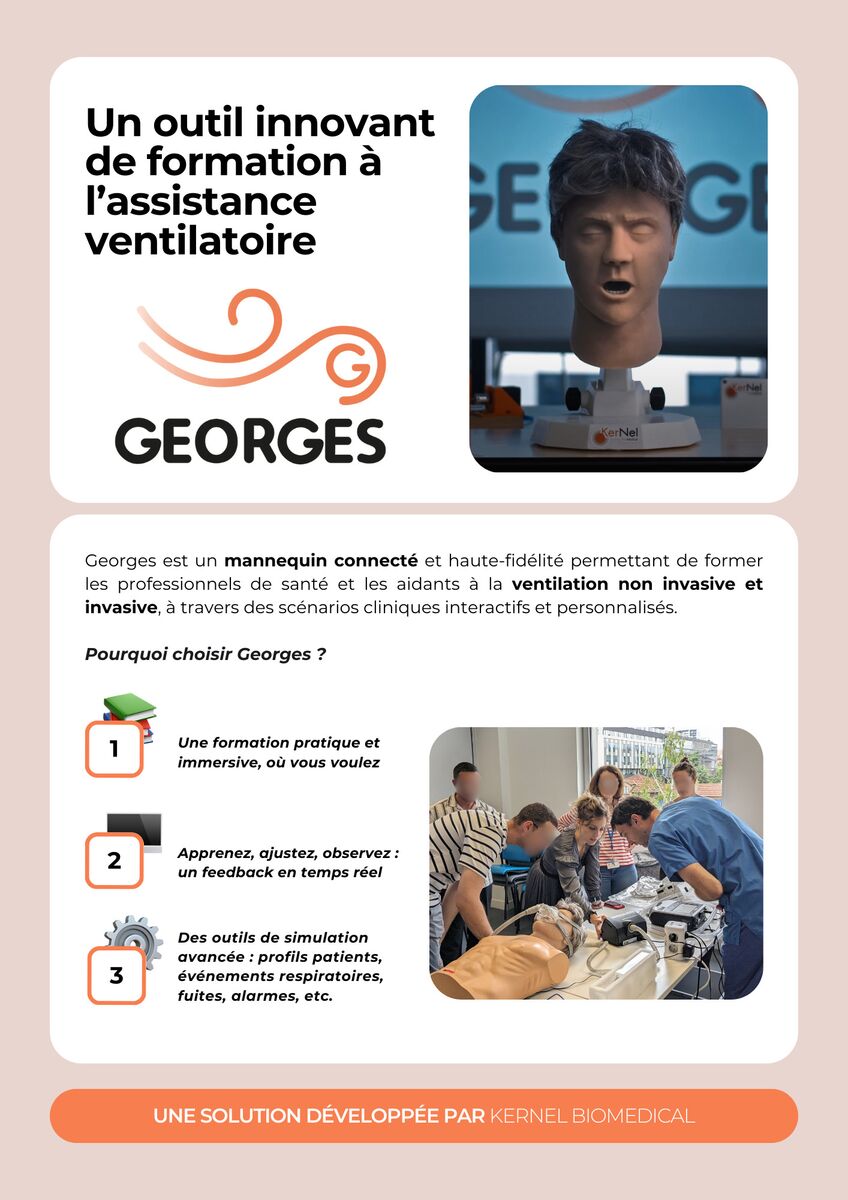
Georges is a high-fidelity patient simulator designed specifically for mechanical ventilation training.
It combines a realistic anatomical head with an internal respiratory system including a high-precision mechanical lung, integrated into a software-controlled setup. This makes it possible to reproduce inspiratory efforts, variable volumes, and realistic pathological profiles in a fully instructor-controlled environment.
Georges is designed to be used with real ventilators. It does not simulate the machine, but rather the patient response: participants interact with a real clinical environment using the equipment they use in the field. This compatibility guarantees training that can be immediately applied in practice.
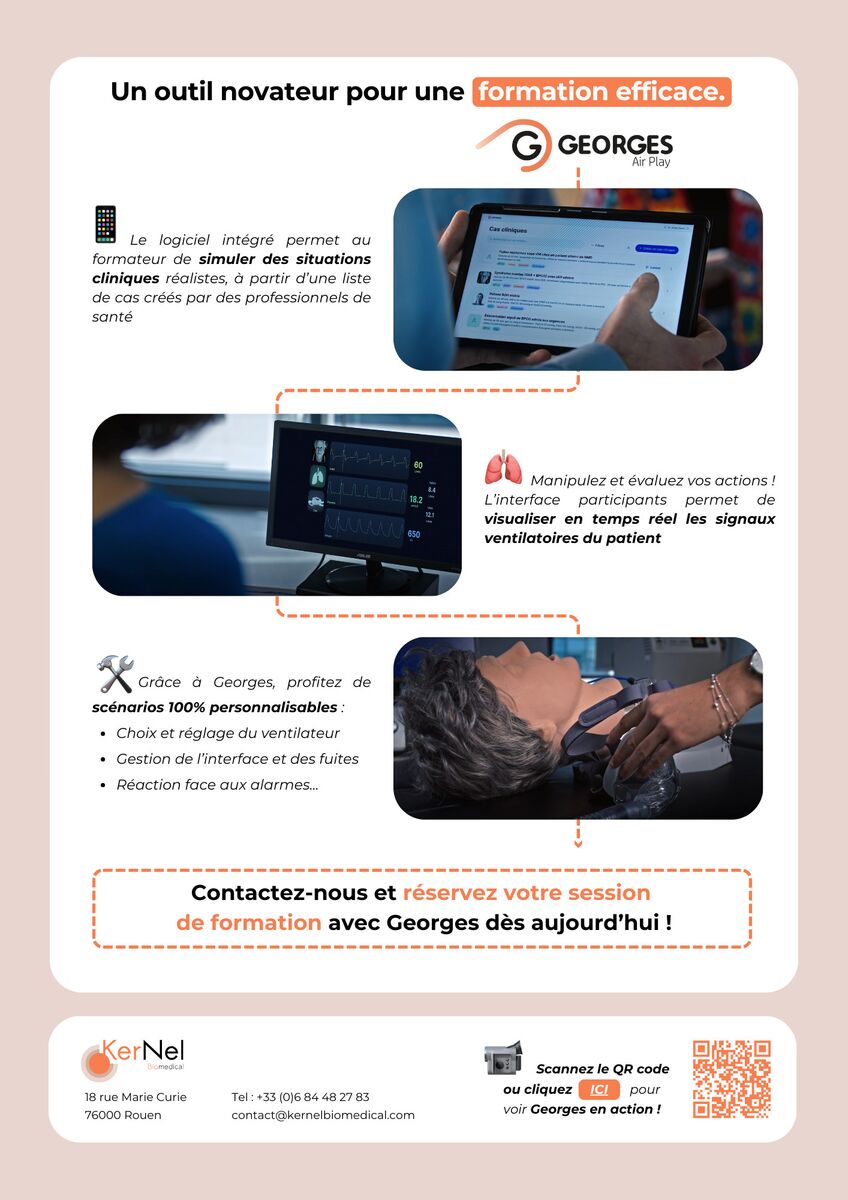
During sessions, learners change ventilation modes, choose interfaces, and observe the immediate response from the "patient": flow curves, pressure, alarm triggers. Each action produces a visible reaction. This direct interaction loop turns training into a true real-life scenario.
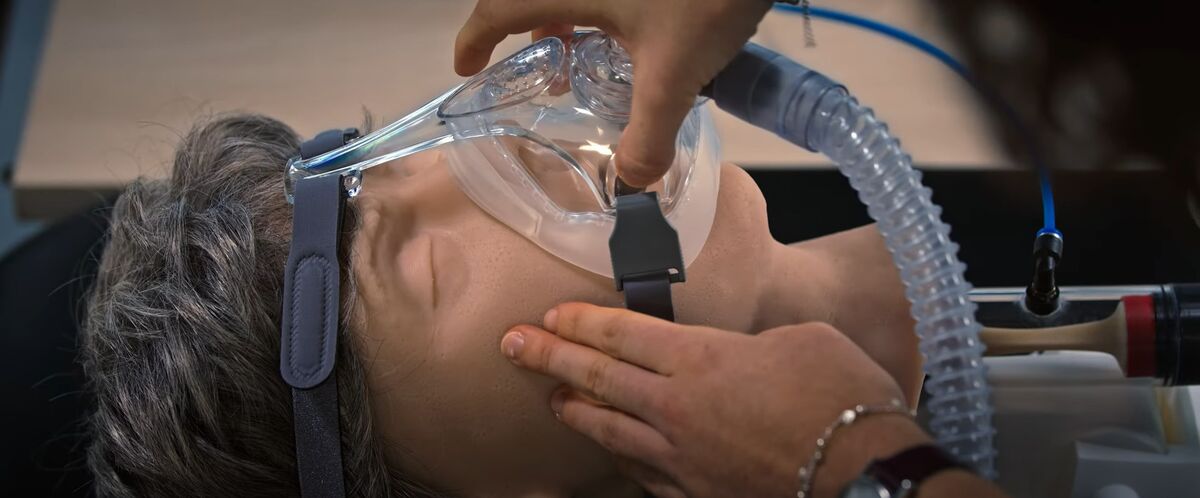
Customizable scenarios, led by the instructor
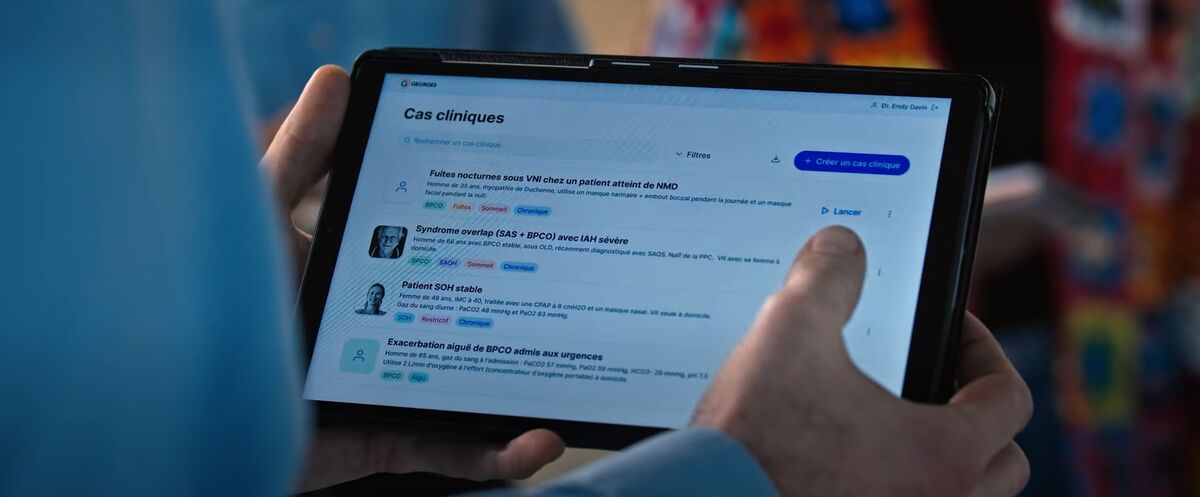
The instructor controls the learning path, building scenarios tailored to the audience, the objectives, and their level.
Georges includes a library of clinical profiles (adult, pediatric, obstructive, restrictive) and allows simulation of varied situations: hypopnea, apnea, major leaks. These events can be triggered manually or embedded in a progressive scenario to guide analysis or test reactions.
By adjusting these parameters, the instructor can deliver both basic ventilation training and complex cases rarely covered in standard curricula, while maintaining a safe, reproducible setting faithful to real conditions.
- Choice of patient profile : varied respiratory pathologies, adjustable severity
- Event triggering : obstructions (hypopnea, apnea), simulated leaks
- Compatibility with real equipment used in the field : ventilators, circuits, interfaces
- Adaptable progression : from basic gestures to complex incident handling
The instructor leads, the group explores, and each session becomes a real clinical scenario.
Who is this training for?
This training is for anyone dealing with ventilatory support in daily practice, whether prescribing, setting up, or supporting.
We designed this training to address a range of profiles, with modular scenarios and adjustable difficulty depending on experience and role.
Participants we train today include:
- Prescribing physicians in the DPC program (pulmonologists, PM&R, intensivists, neurologists),
- Healthcare professionals from home-care providers (physiotherapists, nurses, technicians),
- Continuing education trainers, internal or external to organizations,
- Caregivers and family members, dealing with alarms, incidents, or settings in the patient's daily life,
- And more broadly, anyone who needs to handle a ventilator or ensure follow-up.
Whatever the context (prescription, setup, monitoring, or support), this training gives you the keys to understand, act, and secure every intervention.

A field experience, deployable anywhere
Because training is more effective in a familiar environment, Georges comes to you.
The simulator is designed to be transported and used directly at your premises, whether in a hospital department, a training center, or a home-care provider site. It requires no specific infrastructure or heavy setup.
Everything is planned for smooth integration:
- The equipment is packed for safe transport,
- Setup is quick, and the training team handles installation,
- The instructor interface is intuitive, enabling fast onboarding,
- The ventilators used are the ones you already handle : training is immediately relevant, with no unnecessary learning curve.
Georges adapts to your constraints, spaces, and teams. It makes training more accessible, more engaging, and most importantly, grounded in reality.

Would you like to book a training session with Georges?
Book a training session